Understanding Endosure Technology
Built on scientific research into the relationship between endometriosis and electrical activity in the gastrointestinal tract
The challenge of diagnosing endometriosis
Endometriosis affects an estimated 1 in 10 women of reproductive age, yet diagnosis often takes many years. Symptoms vary and may overlap with other conditions, making diagnosis challenging.
Investigations can include clinical assessment, ultrasound or MRI and, in some cases, laparoscopic surgery. These approaches remain important, but normal imaging does not always exclude endometriosis.
The EndoSure test offers an additional, non-invasive assessment to help clinicians guide further investigation and care.
Research published by John Mathias and colleagues in 1998 explored the relationship between endometriosis and abnormal gastrointestinal muscle activity.
Subsequent research describes how prostaglandins, chemical messengers associated with endometriosis, may influence the electrical activity of gastrointestinal smooth muscle.
EndoSure records this electrical activity through sensors on the skin and analyses it for patterns associated with endometriosis. It measures the electrical response rather than prostaglandins directly.
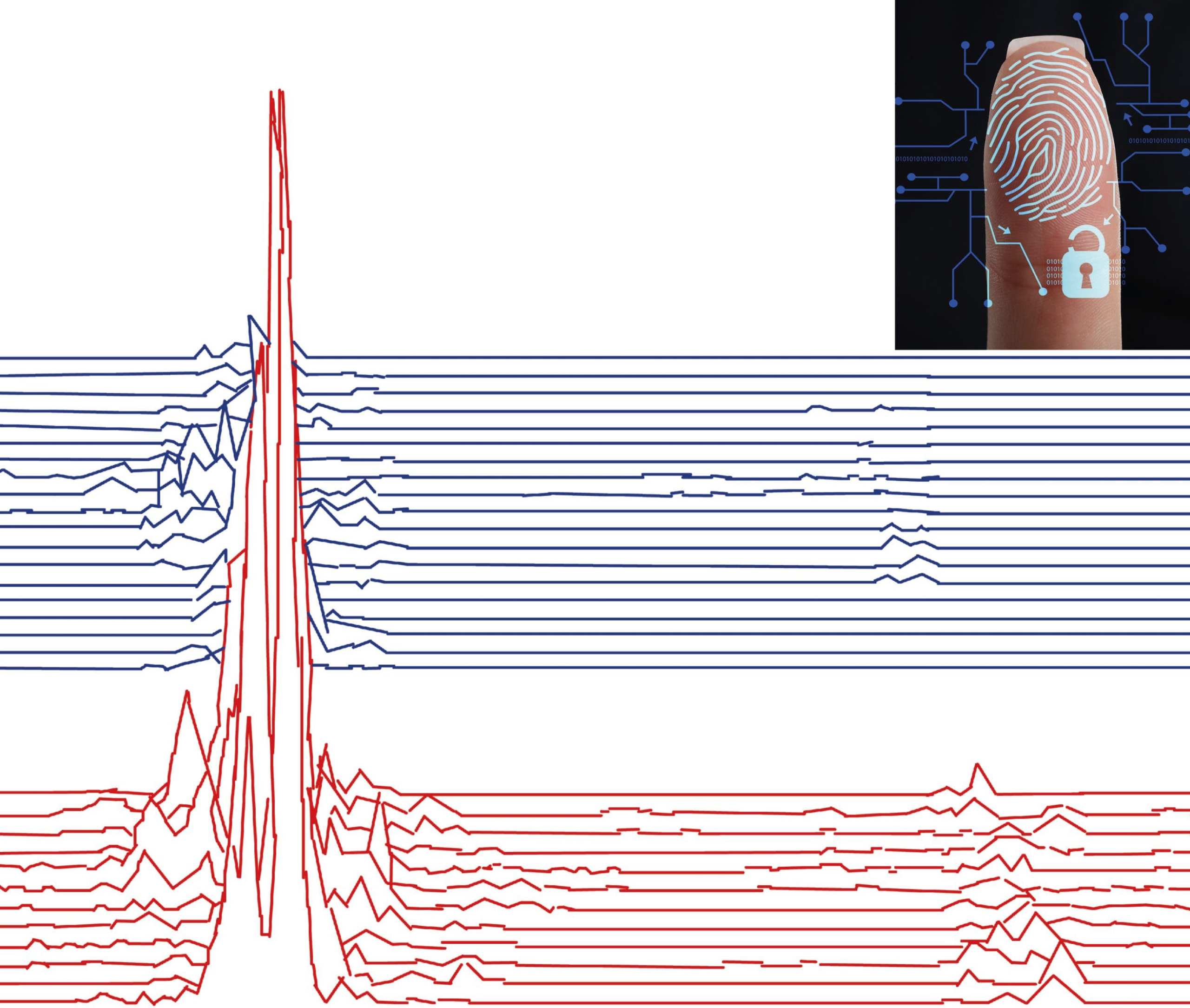
THE DIGITAL FINGERPRINT OF ENDOMETRIOSIS
EndoSure software examines the frequencies and patterns of electrical activity recorded before and after you drink water. It combines information from the recording to calculate scores that help indicate whether the activity is consistent with endometriosis and/or adenomyosis.
UNDERSTANDING MYOELECTRICAL ACTIVITY
The smooth muscles in your digestive system produce tiny electrical signals as they contract to move food through the gastrointestinal tract. This is known as myoelectrical activity.
Research has linked endometriosis with changes in these electrical patterns. The EndoSure Test records and analyses this activity to identify patterns associated with the condition, rather than looking directly for endometriosis tissue.
How does EndoSure record these signals?
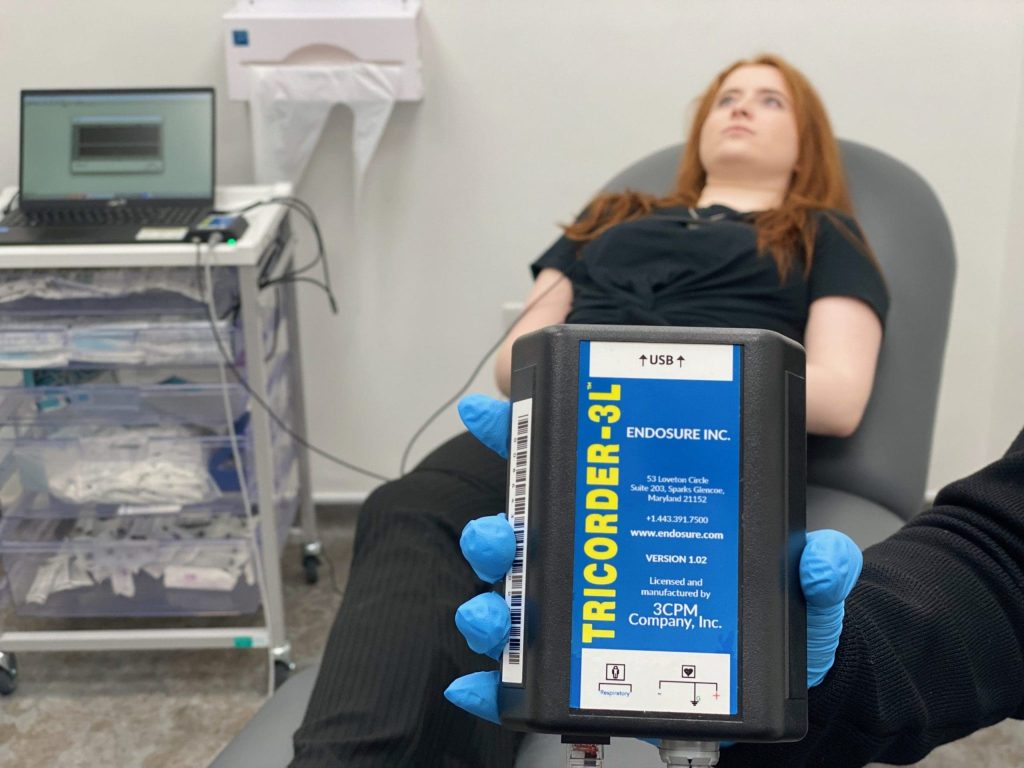
Three small adhesive sensors are placed on your abdomen to record electrical activity from the gastrointestinal tract. The recording approach is similar to an ECG, which records electrical activity from the heart.
An initial baseline recording is taken before you drink water as part of the test protocol. A further recording lasting approximately 30 minutes measures the gastrointestinal response.
The entire appointment takes around one hour and is performed while you remain still and comfortable in a reclining position.
What is a biomarker?
A biomarker is a measurable feature of the body that provides information about a medical condition.
For the EndoSure test, the biomarker is a characteristic pattern of gastrointestinal myoelectrical activity associated with endometriosis. It is recorded using sensors on the skin, without taking blood or tissue samples.
What Is an Electroviscerogram (EVG)?
An electroviscerogram, or EVG, is a recording of electrical activity from organs within the abdomen.
During the EndoSure Test, sensors on the skin collect this activity for analysis. The procedure is non-invasive, with no needles or internal examination required. As the recording is completely external, patients generally experience no discomfort beyond wearing the adhesive sensors.
CLINICAL RESEARCH
The scientific foundations of the EndoSure test include research published in 1998 exploring the relationship between endometriosis and gastrointestinal muscle activity.
A peer-reviewed study published in 2024 evaluated gastrointestinal myoelectrical activity as a diagnostic biomarker in 154 adults and reported excellent results. Ongoing clinical studies aim to build on this evidence and further assess EndoSure across different patient groups and clinical settings.
Patients and healthcare professionals can explore the research below.